Automotive
Automotive
Ever since the Chinese Association of Automobile Manufacturers (CAAM) realized people who really need data would be willing to pay for it (graduate students excepted), getting one's hands on sales data has become a bit of a challenge. Whereas in years past one could wait until a few days after the close of the year to get a complete list of China's vehicle sales by manufacturer, now we have to troll Chinese language news releases that dribble out during January.
An interesting phenomenon I have begun to notice is that, the longer it takes an automaker to release publicly its sales numbers, the greater the likelihood that those numbers aren't very good. A case in point is First Auto Works (FAW), a central state-owned enterprise with a long and storied history as the PRC's first automobile factory, and maker of the iconic Red Flag Limousine used to ferry Party Leaders shouting "同志们好!" (hello, comrades!) in parades.
Even though two of China's largest automakers, Shanghai Auto (SAIC) and Dongfeng, released their 2010 numbers in the first week of January, FAW's numbers did not come out until today, January 18. And while FAW's numbers, by themselves would be the envy of any automaker, they weren't as good as Dongfeng's.
For the longest time, FAW could hold its head high as, not only the first automaker, but also the largest. In the chart below, FAW still held the number one position as recently as 2005, but dropped to second behind Shanghai Auto in 2006. In 2010, FAW dropped to third behind Dongfeng, which, until about 20 years ago, was appropriately named Second Auto Works (SAW).
Vehicle Sales 2005-2010 (thousands of vehicles)

I look forward to conducting more analysis on these numbers as the laggards finally begin to report in. (I'm looking at you, Guangzhou Auto and Brilliance.)
Three important stories in the China electric vehicle world. The first one is a Local BizGov story...
Shenzhen's new EV subsidies
A little over a month ago, Beijing announced a pilot plan for new energy vehicle subsidies in five Chinese cities, one of which is Shenzhen. In short, the plan calls for subsidies of up to 50,000 yuan for plug-in hybrids and up to 60,000 yuan for pure electric vehicles.
Shenzhen, home of battery and auto manufacturer BYD, has also announced its own subsidies to be added to those from Beijing. Shenzhen will provided subsidies of up to 30,000 yuan for plug-in hybrids and up to 60,000 yuan for pure electrics.
With total subsidies of up to 80,000 yuan ($11,800) for a plug-in hybrid or 120,000 yuan ($17,700) for a pure electric vehicle, these still experimental cars are reaching a price point where early adopters in China would be willing to consider them.
And Shenzhen wins brownie points: from Beijing for supporting low- or zero-emission vehicles, and from BYD who will, it is hoped, build more cars, employ more people and pay more taxes.
If there is another city in the world where new energy vehicles are more affordable than they are in Shenzhen, I am not aware of it.
US-China Acquisition
Santa Rosa, California based ZAP Motors (a company you've probably never heard of) has just signed an agreement to acquire 51 percent of Taizhou based Zhejiang Jonway Automobile for about $28 million in cash.
Yes, you read that right. This is not a joint venture; it's an acquisition.
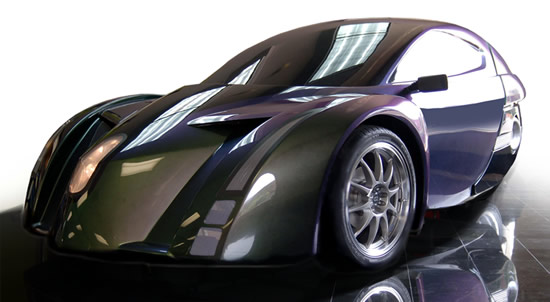
ZAP, which has been in operation since 1994, has, until recently made electric vehicles designed for off-road use in such places as airports, military bases, large factories, etc. It gained some recognition by showing this futuristic electric car, the Alias at Beijing's Auto Show a few months ago.

And this is no mere concept car. Apparently ZAP had already (pre-acquisition) contracted with Jonway Auto to build the Alias with current plans to introduce it in the US later in 2010.
Jonway Auto is (or will be until this acquisition takes place) owned by Jonway Group which manufactures cars and motorcycles. I am unable to determine who owns Jonway Group, but due to its location in Taizhou, I think it is a pretty good bet that the company is private. And the fact that a foreign company is about to buy a majority stake in one of its subsidiaries is also a good indication that Jonway is most likely not state-owned. (Then again, the difference between public and private is still quite blurry in China.)
Even more interesting is the fact that Jonway has been quite profitable while ZAP, which reportedly hasn't earned a profit since 2002, has only recently emerged from bankruptcy.
On second thought, I'm quite certain Jonway isn't state-owned.
China's new energy vehicle policy is on the way
And finally, Dong Yang, secretary general of the China Association of Automobile Manufacturers announced that a policy on new energy vehicles is in the works and will probably be released in September or October.
About those subsidies I mentioned above, well, China is apparently just getting started. We can expect to see a more comprehensive plan laid out this fall with details on how China intends to dominate this space -- globally. Among other things we can probably expect to see further incentives for auto companies to conduct R&D in this area and further plans for rollout of charging stations.
The lines are being drawn In the global battle to dominate alternative energy vehicle manufacturing. We could not ask for a better real-life experiment to compare the results of state-led vs market-led capitalism.
I was honored to have one of my recent posts, "How do Australia's Foreign Investment Rules Apply to China?", cross-posted by the East Asia Forum where it received the following question/observation from Lincoln Fung:
What does the ownership in terms of public versus private make to owning some shares of a firm in an another country? All firms in a country are subject to the regulations of that country, whether they are owned domestically or by foreign investors. A country can always regulate the behaviour of the firms operate in its land. So what are the concerns or fears of a firm is owned by a public firm of another country? It defies logic to understand the reasons behind.
Mr. Fung's questions are very important. Indeed, this distinguishing between "public" and "private" drives much of my own research. And, in fact, I used Mr. Fung's very line of reasoning in an interview about the Rio Tinto case with a journalist from the Sydney Morning Herald earlier this year. As for defying logic, I understand that such a distinction may defy some people's logic; however, from other people's perspectives, such a distinction may seem perfectly logical.
For example, there is the populist logic that a "communist", authoritarian state lacking in transparency and rule of law is not to be trusted. While one may disagree with that premise, it is not difficult to understand why someone holding that premise would logically be wary of China's intentions.
There is also the logic of neoclassical economic theory which tells us that a government, conflicted as it is with various political objectives, cannot run a business as efficiently or effectively as the private sector. Again, someone from China who is accustomed to the government having a major role in just about everything may not understand this "logic".
Many people in the West have been influenced by the two "logics" I have mentioned above. These have become so ingrained in Western culture that few people even bother to question them. However, the recent economic upheavals have led many in the West outside of academia (economists and political scientists have been pondering such questions for quite awhile) to ask whether government can indeed have a positive role.
This is not to say that governments will most certainly have an increased economic role going forward. They may, but then again, there are plenty of reasons to question the sustainability of China's state-centric economy.
A decision to spend the rest of the summer in LA, followed by a decision to move to a different apartment, have interrupted my original research plans. Once my move is out of the way, I expect to spend the rest of the summer absorbing the content of the 30+ interviews I have conducted in China thus far and planning my return to China later in the year, as well as hopefully resuming a more regular blog posting schedule.
Meanwhile, I was recently interviewed about my research by the intrepid Aimee Barnes, a New Yorker and China specialist who interviews other China specialists with diverse backgrounds. I am honored to have been added to the mix.
You can find a transcript of the interview on Aimee's blog, here.
A "little something extra" today... Three random thoughts from Shanghai...
Historical Monument in Xintiandi
This morning I had a revealing and fascinating research interview at a location in Shanghai's swanky Xintiandi area. For those who don't already know, Xintiandi (新天地, or "new heaven and earth") is a relatively new development in the former foreign concession area of Shanghai where old Shanghai-style buildings have been completely renovated and turned into a very interesting collection of shops and restaurants. Some Chinese friends introduced it to me as a place where I can go to "have a drink with other foreigners" -- which is not exactly something I've been looking for, but it's nice to know.

While strolling around I came across this sign that seemed quite ironic to me. It says this is the location of the first meeting of the People's Congress of the Chinese Communist Party -- right here in the middle of this monument to capitalism and possibly the largest concentration of foreigners in all of China.

Surely I am not the first person to make note of this, so if you're already aware of it, then please feel free to chalk it up to yet more inane comments from yet another white-dude blogger. :-)
Taxi Advertising
Last evening someone posted a link in Twitter to this WSJ article about seat-back advertising in Shanghai. On the way back to my hotel from Xintiandi today, I was (un)fortunate to grab a taxi with one of these things. It's a small LCD video screen running nothing but constant ads.

As with the other times I have seen these things, I watched for about ten seconds before hitting the mute button. It strikes me that this model is all ads and no content. If the taxi offered Tivo, the screen would remain blank. I'm not an advertising executive, but I am a human, so I think I have a valid opinion on this. Then again, maybe it was intended for the average Shanghai resident who has seen the city so many times that they would rather watch ads than look out the window.
Yes, I'm still stuck on autos...
In yet another Twitter posting I saw today, someone put up a link to this Steve Clemons blog entry at The Washington Note. In this post, Steve tells about his visit to the BYD factory in Shenzhen and praises their development of plug-in hybrids.
Though I think he is a little too optimistic in his assessment of BYD's (and China's) new energy vehicle capabilities (I have noted my pessimism in a previous post) he is one of the few people who dares to mention the unthinkable, an increase in the US federal gasoline tax so that gasoline never drops below $4 per gallon. Since I don't intend to run for President, I would like to say that I agree with this proposal -- particularly if it is phased in over a few years and the proceeds are 100% devoted to local public transportation alternatives.
As for my assessment of China's new energy vehicle development, I have still yet to meet any auto insiders here who are as optimistic as foreigners are, but I am still fully supportive of anyone who is pouring money into this important effort.
I've hit a lull in my China auto research as many of my initial contacts have played out, and finding new ones is a painstakingly slow process. I never thought this would be easy -- indeed, if it were, someone else would have already done it -- but I never imagined it would be so difficult just to get people to talk to me. I expected the difficulty to be in getting them to open up once I already had the interview.
Having discussed this with a few people, I find the consensus that, despite China's tremendous development and "opening up", China is as closed as ever when it comes to discussing the internal workings of this country. Perhaps this is a key answer to why the rest of the world still hasn't welcomed the "new China" with open arms: open societies have difficulty trusting those that are closed.
Political commentary aside, here are some random auto-related items that have caught my attention...
GM Plans to Export Cars from China to US
According to the SCMP, GM is planning to export up to 17,000 China-built autos to the US beginning in 2011. This would make GM "the first automaker to begin exporting to the US from China".
From a Chinese perspective, I think this move is a godsend, and China's government should be doing all it can in the background to facilitate this (and maybe it is). The difficulty that Chinese brands will have in the US is establishing trust. It strikes me as a good interim move to have Chinese-built, American-branded cars accepted first by US consumers.
While the idea may seem crazy to Americans right now, just remember how much we laughed at Japanese cars in the 70s and Korean cars in the 80s. We're not laughing now.
Furthermore, I am convinced that the quality of cars being built by American workers is second to none. Once Detroit legacy costs have been offloaded (subliminal guy coughs "UAW" under his breath), the Big 3 (or whatever remains of them) will be among the most competitive in the world.
Chongqing to Subsidize Buyer of Changan Hybrid
As reported by Gasgoo.com, the city government of Chongqing has announced its intention to subsidize the purchase of hybrid vehicles. This subsidy of up to 36,000 RMB ($5,270) comes on top of generous subsidies expected to be confirmed by the Central Government as early as next month.
There's just one catch. The subsidy will only be given for hybrids made by one company, Changan, which is headquartered in (drum roll)... Chongqing.
Local protectionism continues to rear its ugly head.
Speaking of Gasgoo.com ...
This venerable auto-related website decided my most recent post "Will China Lead the World in New Energy Vehicles?" was worth reposting on its own site. For this, I am honored because I look to Gasgoo.com as an authoritative source for China auto-related news and information.
While I am grateful to Gasgoo for listing yours truly as the author of the piece, I was disappointed that they listed its source as "Gasgoo.com", and that they also neglected to include a link back to my website. Despite a comment I left on my story at their website, and an email I sent to them several days ago, they have failed to extend to me the same courtesy that I give to them when I cite their stories.
How 'bout it, guys?